The pomegranate tree
Archimandrite Nikifor’s Biblical Encyclopedia
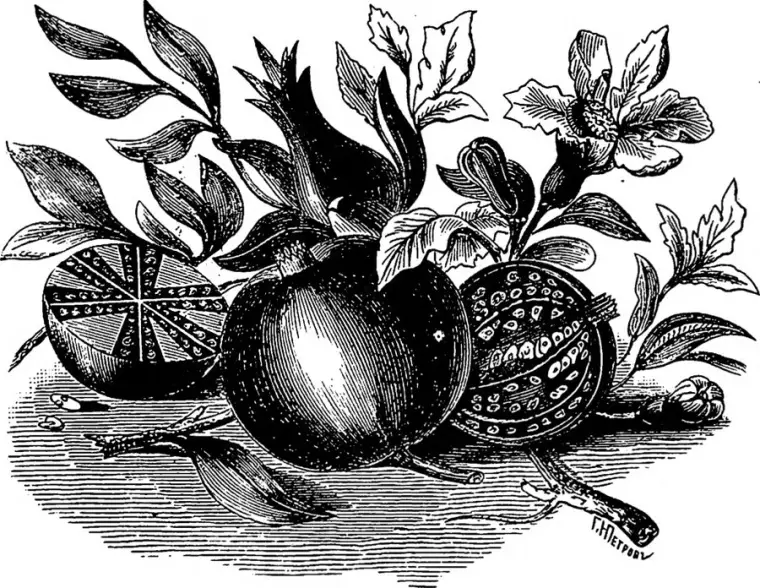
(apple) (Num. 20:5; Deut. 8:8; Joel 1:12; Hag. 2:19; Song of Songs 4:13; 7:13; 8:2) — of the myrtle family. In the wild state the pomegranate tree sometimes reaches considerable size, but the cultivated variety is always a small tree. Pomegranates grow abundantly in Palestine, are attractive in appearance and pleasant to the taste, being a refreshing and cooling fruit; hence they are frequently referred to in Holy Scripture. When the Israelites came into the wilderness of Zin, they murmured against Moses that in it there was neither water, nor figs, nor vines, nor pomegranates (Num. 20:5), whereas the land promised to them was to be a land of various fruit-bearing trees, among them pomegranates as well.
The spies brought to Joshua from the land of Canaan, together with grapes and figs, pomegranates also (Num. 13:23). The prophets Joel (1:12) and Haggai (2:19) speak, as of a punishment from God, of the withering and drying up of pomegranate trees. Settlements or cities: Rimmon (Josh. 15:32), Gath-rimmon (21:35 [as given]), En-rimmon (Neh. 11:29), probably took their names from pomegranate groves located near these cities. One pomegranate tree, probably of remarkable size and beauty, grew in Saul’s time at Migron, on the edge of Giva of Benjamin (1 Sam. 14:2).
Pomegranate trees and fruit are repeatedly mentioned in the Song of Songs. In this book now a garden of pomegranates is mentioned (4:13), now the bride’s cheeks, on account of their rosy hue, are compared to a slice of pomegranate: “as a piece of a pomegranate are thy temples within thy locks” (4:3), now the beauty of the flowers and fruit of the pomegranate tree is pointed to (6:7–11; 7:13). At present, juice is pressed from pomegranates and one of the finest, most cooling sherbets in the East is prepared from it; this drink, it appears, was prepared in antiquity as well, for in the Song of Songs it is said: “I would cause thee to drink of spiced wine, of the juice of my pomegranate” (8:2).
The fruits of the pomegranate tree were everywhere so prized for their beauty and taste that the blue robe, or ephod, of the high priest was adorned with images of pomegranates (Exod. 28:33, 34), and likewise the capitals of the two bronze pillars (Jachin and Boaz) were adorned with various images of pomegranates (1 Kings 7:18, 20; 2 Chron. 3:15, 16).