Darius
Archimandrite Nikifor’s Biblical Encyclopedia
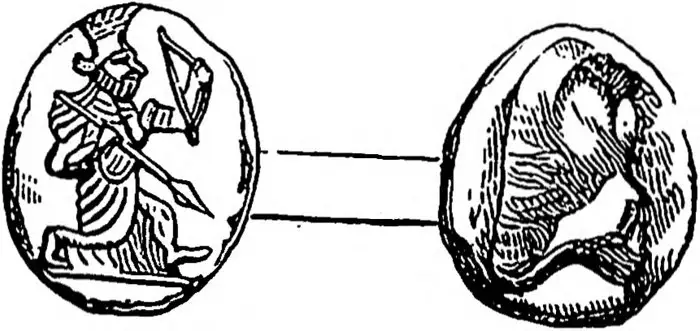
(Persian: king, ruler; on ancient monuments: Darayavaush) — the name of several kings mentioned in Holy Scripture: a) (Dan. 5:31, and elsewhere) Darius I the Mede (11:1), son and heir of Ahasuerus — the last Median king. To his proper name “Darius” was added the designation “Astyages,” probably a general royal title, otherwise “Ashdahak,” which means “biting serpent” — a symbol of the Median kingdom. Under this king Daniel was raised to the highest dignity (6:2) and deemed worthy by God of new revelations.
After the miraculous deliverance of Daniel from the lions’ den, Darius issued a decree throughout his realm: “that men tremble and fear before the God of Daniel: for he is the living God, and stedfast for ever, and his kingdom that which shall not be destroyed, and his dominion shall be even unto the end” (6:26); b) (Ezra 4:5; Hag. 1:1; Zech. 1:1) — a second king of the same line, son of Hystaspes, who ascended the Persian throne after the killing of the false Smerdis. In his reign the Jews returned to Jerusalem and resumed work on the rebuilding of the Jerusalem Temple.
In the sixth year of his reign the building of the Temple was completed, it was consecrated, and the Passover was solemnly celebrated in it. The city of Babylon, dissatisfied with some of Cyrus’s decrees, rebelled, and Darius, after a siege lasting nearly two years (in which the prophecy of Isaiah [47:7–9] was almost literally fulfilled), took possession of this city. According to the testimony of Herodotus, he ordered the hundred bronze gates of Babylon torn down and razed to their foundations (Jer. 51:58).
Darius was defeated by the Greeks in the famous battle of Marathon; c) (Neh. 12:22; 1 Macc. 1:1) — third and last king of Persia, Darius III, otherwise Darius Codomannus. Alexander of Macedon defeated him first at the Granicus, then at Issus and Arbela, and thereby put an end to the Persian monarchy. Thus were fulfilled the prophecies of Daniel (2:39, 40; 7:5, 6, 20–22); d) (1 Macc. 12:7–20) — one of the kings of the Lacedaemonians, contemporary of the high priest Onias I. In the Alexandrian codex and in the Vulgate this name reads: Areus.